A constellation of tools for content addressing.


“It’s crucially important to have a distributed file system in our open hypertext system. IPFS is the missing piece that allows for a truly decentralized and open web.”

“Our local data infrastructure was stuck in customs. We set up IPFS on notebooks and a Raspberry Pi, and suddenly all scientists could sync, share, and collaborate, with automatic uploads back to Hamburg whenever the connection returned.”

“There is no central point of compromise anymore. There is no database that can be hacked, because the data just doesn’t exist, even in encrypted form, in one place anywhere. It only comes together at the edge device of the patient.”
“IPFS is the standard for storing data in a verifiable and fully transparent way, thereby allowing us to build openly auditable governance systems.”
“Using IPFS private swarms, we deployed a fleet of devices communicating mission-critical data in a factory without any central infrastructure, which has allowed us to move much faster.”

“It was such a relief to know I could store my videos in one place, each with its own IPFS URL and CID. Resilience is important to me, and having the work backed up means it’ll be around for a long time.”

Every tool in the IPFS constellation makes two commitments. Pick one to see it in motion, and grab the building blocks you need.
Anywhere data needs to be verifiable, CIDs tend to show up. A sample of what teams have built with the IPFS tools at the core.
AT Protocol uses CIDs so anyone on the network can verify what they receive. No trusted server in the middle.
AT Protocol identifies every post, repo, and event by CID, so any client can verify what it received without trusting the server that delivered it.
Seed builds collaborative documents where every version, comment, and link is addressed by CID, durable across servers, editors, and time.

Anytype uses content addressing to let users build personal knowledge webs that sync peer to peer, with no server lock-in.
The same content-addressing model works on the open internet and in closed private networks. Same CIDs, different routing.
Nodes discover peers via the Amino DHT and IPNI. Any compliant node can join and find content, no coordination required.
Public peers, private data. Content is encrypted. CIDs route over the Amino DHT while ciphertext stays opaque to every transit node.
All peers share a swarm key. Routing and transfer stay within the closed network. Nothing routes in or out without it.
Gateways pull content from the IPFS network and serve it over HTTP. Browsers verify data against the CID locally, trust is rooted in CID, not the gateway.
Start from the problem. Each row maps a real use case to the tools that solve it. Filter by language to narrow quickly.
Run Kubo with a swarm key for a closed IPFS network, or use iroh-blobs for lightweight QUIC-native transfer.
Run a Kubo or Helia node to pin and serve content; use ipfs-cluster for coordinated pinning across multiple nodes.
Upload to a pinning service, they handle replication, availability, and IPNI/DHT announcements.
Drop ipfs-deploy-action into your CI pipeline to get a CID per build and pin it automatically. Omnipin offers one-click pinning via MetaMask.
Fetch and cryptographically verify IPFS content directly in the browser with no trusted gateway required.
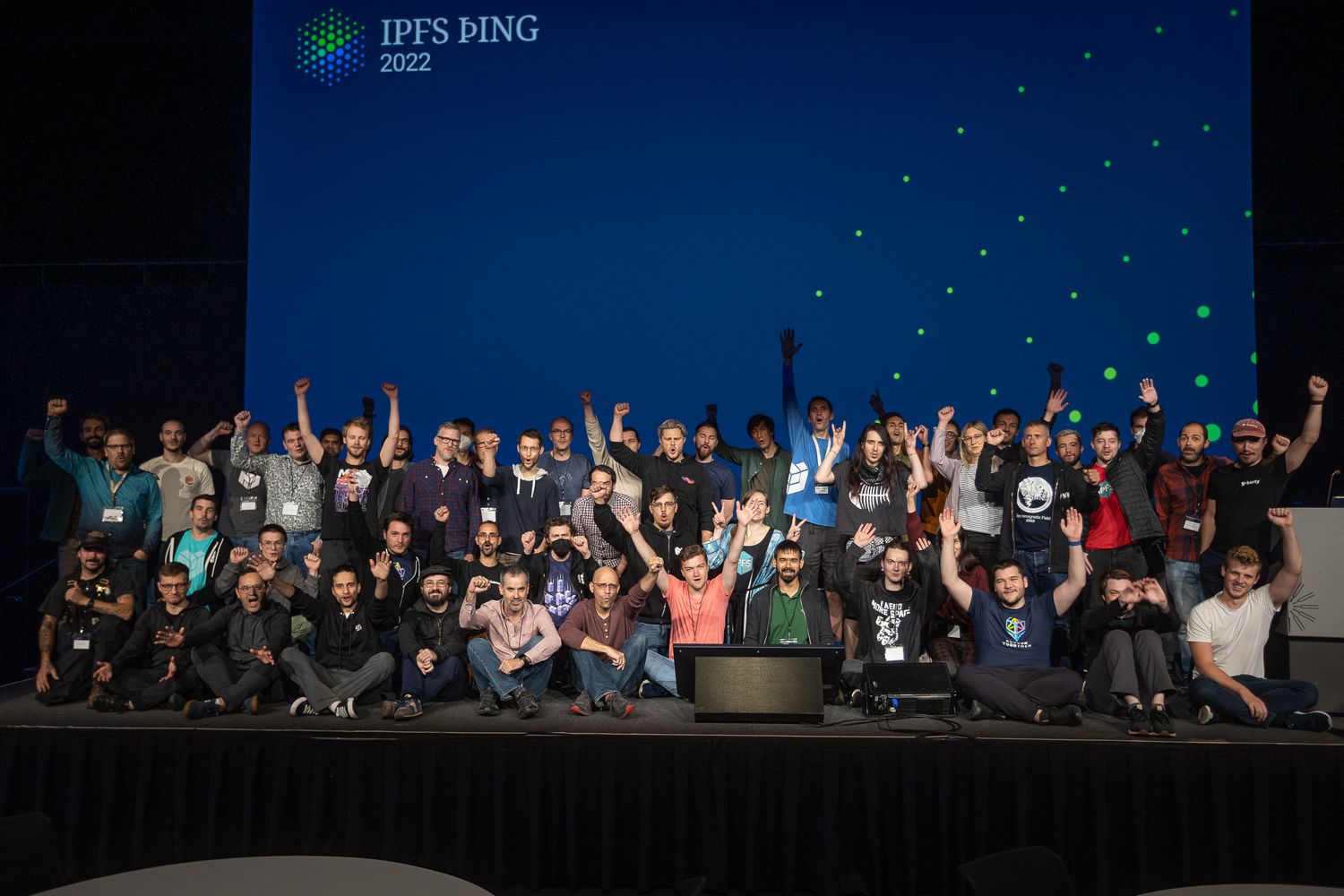
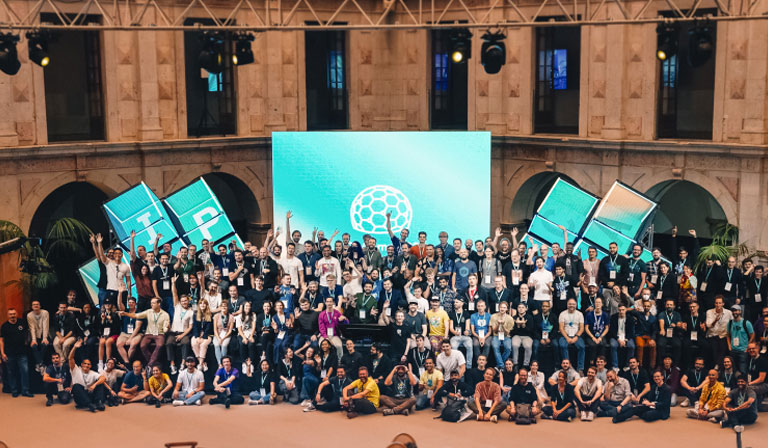
IPFS is built in the open by a thriving community. Chat with builders, propose changes, and find the next event near you.